
Making Memorial Day Meaningful for Kids: More Than Just a Day Off
Memorial Day weekend is a significant time in the United States, marking the unofficial start of summer and offering a chance for reflection. For families, it's a perfect opportunity to teach children about the true meaning behind the holiday. It's about more than just barbecues and beach trips; it's about honoring those who made the ultimate sacrifice for our country. This guide offers simple, age-appropriate ways to make Memorial Day meaningful for kids, fostering understanding and respect.
Understanding the 'Why' Behind Memorial Day
Before diving into activities, it's helpful to establish a basic understanding of what Memorial Day represents. For younger children, focus on the idea that brave men and women gave their lives to protect our freedom and way of life. Avoid overly complex explanations and instead, emphasize gratitude and remembrance. The goal is to plant seeds of respect that can grow as they do.
Age-Appropriate Explanations
For Preschoolers (Ages 3-5): Explain that Memorial Day is a special day to remember people who were very brave soldiers and are no longer with us because they helped keep our country safe. You can use simple analogies, like remembering a beloved pet or family member who has passed away, to introduce the concept of remembrance.
For Early Elementary (Ages 6-8): You can explain that soldiers protect our country, and some soldiers lost their lives doing that important job. Memorial Day is a time to thank them and their families for their bravery. You might talk about how they won't be home for holidays or birthdays anymore, which is why we remember them.
For Older Elementary/Middle School (Ages 9-13): At this age, children can grasp more nuanced concepts. Discuss the history of Memorial Day, its origins after the Civil War, and its evolution to honor all who died in service. Emphasize the importance of civic duty, sacrifice, and the freedoms we enjoy because of their service.
Activities for Remembrance and Reflection
Engaging children in hands-on activities can help them connect with the holiday on a deeper level. These activities can be done at home, at a local park, or as part of community events.
Visiting Memorial Sites
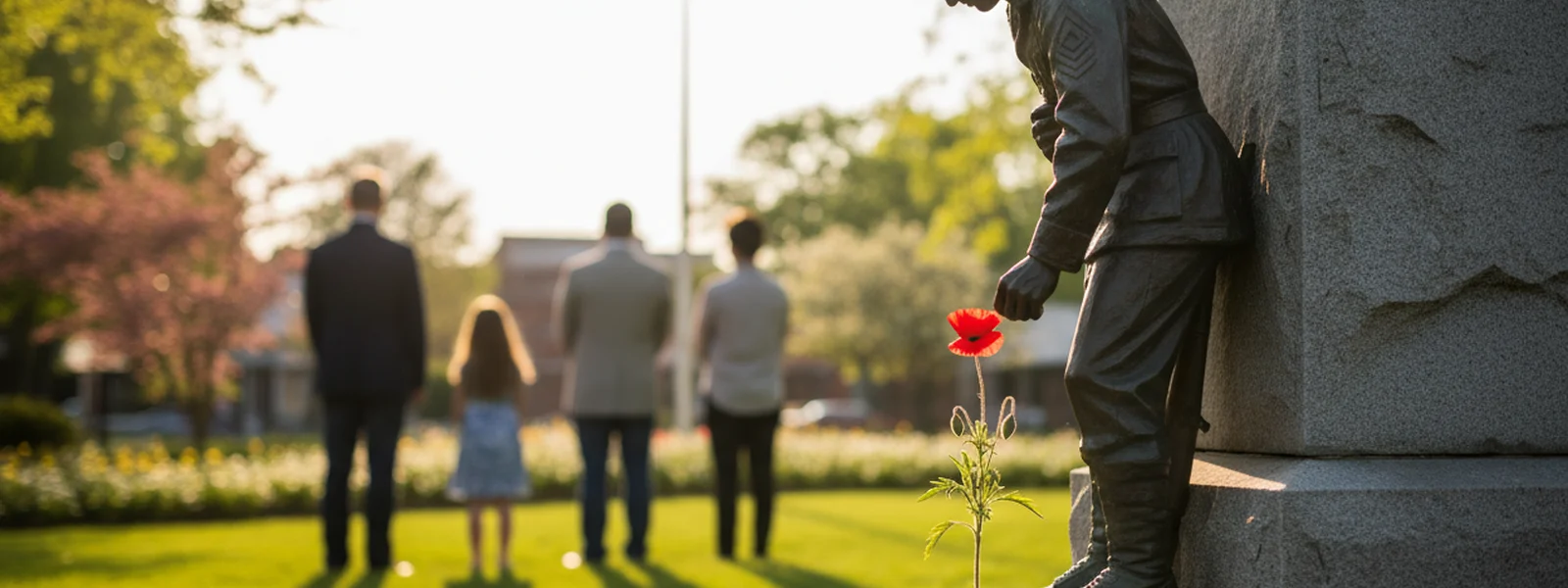
If possible, take your children to visit a local memorial, cemetery, or monument. This provides a tangible connection to the holiday. Many communities have specific Memorial Day ceremonies. Attending one can offer a powerful experience, often featuring patriotic music, speeches, and a moment of silence. Seeing families lay flowers or flags can also be a moving visual.
Creating Memorial Crafts
Crafts can be a gentle way to introduce the theme of remembrance. Children can create handmade cards or drawings to send to veterans' organizations or to place at local memorials. Making simple paper poppies, a symbol of remembrance for fallen soldiers, is another meaningful activity. You can also create a family memory jar where each person writes down a name or a thought about someone they are remembering.
For those looking to coordinate family outfits for these reflection moments, consider our Family Celebration shirts. They are designed to help everyone feel connected, whether you're attending a ceremony or simply want to show your family's pride.
Learning Through Stories and Books
Reading age-appropriate books about Memorial Day, veterans, and bravery can be incredibly impactful. These stories offer different perspectives and help children understand the sacrifices made.
Consider a classic patriotic tee like the America Est. 1776 Flag Lettering T-Shirt for yourself or older children. It’s a simple yet meaningful way to show pride during the holiday.
Recommended Reading:
- For Younger Children: "The Wall: Growing Up Behind the Vietnam Veterans Memorial" by John McCutcheon, "America the Beautiful" by Katharine Lee Bates (illustrated), or "H is for Honor: D-Day" by Vince Vawter.
- For Older Children: "What is Memorial Day?" by Stephanie Sabol, "The Poppy Lady: Moina Belle Michael and Her WWI Poem That Helped a Nation Remember" by Barbara E. Walsh, or "Twenty-One Steps: Guarding the Tomb of the Unknown Soldier" by Jeff Gottesfeld.
These books can open up conversations about history, bravery, and the importance of remembering.
Incorporating Patriotic Symbols
Using patriotic symbols can help children connect with the holiday visually and symbolically. Explaining the meaning behind these symbols adds educational value.
Flags and Poppies
The American flag is a primary symbol of the nation and its freedoms. Explain its significance and the proper way to display it. You can also talk about the tradition of flying the flag at half-staff until noon on Memorial Day, then raising it to full-staff for the remainder of the day. The red poppy, as mentioned, is a powerful symbol of remembrance for fallen soldiers, stemming from the poem "In Flanders Fields." Making or wearing a poppy is a simple act of solidarity.
Community and Group Participation
Encourage participation in local Memorial Day parades or ceremonies. Many communities organize events where families can lay wreaths, observe moments of silence, or simply line the streets to show support. If your community group, like a scout troop or church group, is participating, consider ordering matching shirts from our Group & Event Shirts collection. It fosters a sense of unity and shared purpose.
Teaching Gratitude and Service
Beyond remembrance, Memorial Day is an excellent time to teach children about gratitude and the concept of service.
Writing Thank You Notes
Encourage children to write thank you notes to active-duty service members or veterans. Many organizations collect these notes to distribute. This simple act can mean a great deal to those who have served and their families. It reinforces the idea that their service is seen and appreciated.
Learning About Veterans and Their Families
If you know veterans or families of fallen soldiers, consider reaching out (respectfully, of course). Hearing firsthand accounts, even if simplified for children, can be incredibly powerful. It humanizes the sacrifices and makes the holiday more relatable. This is a great time to consider gifts that show appreciation, perhaps from our Gift Ideas collection.
For families looking to dress in a way that reflects this spirit of shared pride and remembrance, our July 4th Ready collection offers designs that are perfect for any patriotic occasion, including Memorial Day.
Remembering the Sacrifice
It's important to ensure that Memorial Day remains a day of solemn remembrance, not just a holiday for leisure. Balancing fun activities with moments of reflection is key to teaching children the true spirit of the day.
The Importance of Quiet Reflection
Incorporate moments of quiet reflection throughout the weekend. This could be a simple moment before a meal, while looking at a flag, or after reading a book. Encourage children to think about what Memorial Day means to them and why it's important to remember the fallen.
Connecting to Broader Themes
Use Memorial Day as a springboard to discuss broader themes like freedom, responsibility, and civic duty. Explain that the freedoms we often take for granted were hard-won. This helps children understand the value of what they have and the importance of contributing positively to society.
Whether you're attending a ceremony, sharing stories, or simply reflecting at home, the goal is to instill a sense of respect and understanding. For families wanting to share their patriotic spirit, our Patriotic Classics offer timeless designs that are perfect for showing pride year-round. And remember, the spirit of celebration and togetherness extends to July 4th, 2026, our nation's 250th anniversary. You can find matching shirts for the whole family to commemorate this special milestone.
Ready to Shop?
Browse our collection — Celebrate Together — America's 250th, One Family at a Time.
Shop All Shirts
Published by America 250 Shirt Co
Celebrate Together — America's 250th, One Family at a Time
Frequently Asked Questions
How can I explain Memorial Day to a young child?
For young children, focus on simple terms like remembering brave soldiers who are no longer with us because they helped keep our country safe. Use analogies of remembering loved ones to introduce the concept of remembrance without overwhelming them.
What are some good crafts for kids to do on Memorial Day?
Children can create handmade cards or drawings to send to veterans' organizations, or make simple paper poppies, a symbol of remembrance. A family memory jar where each person writes down a name or a thought is also a meaningful craft.
What is the significance of the red poppy on Memorial Day?
The red poppy became a symbol of remembrance for fallen soldiers after the poem 'In Flanders Fields' was written during World War I. Wearing or making a poppy is a way to honor their sacrifice and remember those who died in service.
How can we teach children about gratitude on Memorial Day?
Encourage children to write thank you notes to active-duty service members or veterans. Discussing the freedoms they enjoy because of the sacrifices made by soldiers also fosters a sense of gratitude for their service.
What's the best way to approach Memorial Day ceremonies with kids?
Explain what will happen at the ceremony beforehand so they know what to expect. Point out the flag, the speeches, and the moments of silence. Emphasize the importance of showing respect and listening attentively.
Should we talk about the 'why' behind Memorial Day, not just the 'what'?
Yes, it's crucial. Beyond just knowing it's a holiday, understanding the 'why'—that it's about honoring those who died serving our country—is essential for fostering true respect and civic understanding. Connect it to the idea of freedom and sacrifice.
Get New Designs Before Everyone Else
Be the first to see new 250th anniversary designs, get family photo tips, and hear about limited runs before they're gone.